 |
Information
Introduction
to the AACA & Ontario Region
The
aim of the AACA is the perpetuation of the pioneer days
of automobiling by furthering the interest
in and preserving
of antique automobiles, and the promotion of sportsmanship
and of good fellowship among all AACA members. The AACA uses
the term "automobile" in a comprehensive sense
to include all self-propelled vehicles intended for passenger
use (cars, race vehicles, trucks, fire vehicles, motorcycles,
powered bicycles, etc.). Similarly, the term includes various
power sources, such as gasoline, diesel, steam and electric.
The
AACA holds countrywide competitive and noncompetitive
meets and events. These are on a divisional
basis offering
a program within the reach of everyone. Tours and activities
relating to the hobby can be sponsored or partialy funded
by the hard efforts of its members at such events as the
Sterling Flea Market.
The annual meeting of the
AACA is held in Philadelphia, Pennsylvania during February.
Annual meetings feature conferences and workshops
designed to educate enthusiasts on many aspects of the hobby
- from restoration tips to automotive history. The Ontario
Region holds monthly meetings in the Durham Region
coupled with its annual London to Brighton
tour in the month
of
July.
The AACA is proud of its relationship with the many historical
organizations devoted to similar objectives the world over.
The Club, through its National Headquarters, publications,
library, museum, and membership, aids individuals, museums,
libraries, historians and collectors dedicated to the preservation
of automotive history.
GENERAL DESCRIPTION
The Antique Automobile Club of America is an international
organization with members in all 50 states and in more than
50 countries around the world. The constitution and by-laws
of the AACA form the basis for the organization and operation
of the club. The AACA is incorporated under the provisions
of the Nonprofit Corporation Code of the Commonwealth of
Pennsylvania with a business office located at 501 West
Governor Road, P.O.
Box 417, Hershey, Pennsylvania 17033-0417.
Leadership is vested in
a board of directors consisting of 21 national directors,
each serving a three-year term, with
one-third being elected by the general membership each year.
The national officers, which include the President, Executive
Vice President and Secretary-Treasurer, are elected national
directors. There are over 400 AACA regions and chapters. These
groups provide local activities and represent AACA in their
areas.
AIM AND PURPOSE
The aim of the AACA
is the perpetuation of the pioneer days of automobiling
by furthering the interest
in and preserving
of antique automobiles, and the promotion of sportsmanship
and of good fellowship among all AACA members. The AACA
uses the term "automobile" in a comprehensive sense
to include all self-propelled vehicles intended for passenger
use (cars, race vehicles, trucks, fire vehicles, motorcycles,
powered bicycles, etc.). Similarly, the term includes various
power sources, such as gasoline, diesel, steam and electric. The
AACA exists to support the mutual interests of its
members. It provides a comprehensive activities
program which is available
to all members and their families. The public is encouraged
to take an interest in the organized activities, meets, and
tours, however, direct participation is limited to AACA members...
and VMCCA members in the case of the Glidden Tours®. The
AACA publishes several different types of periodicals and documents,
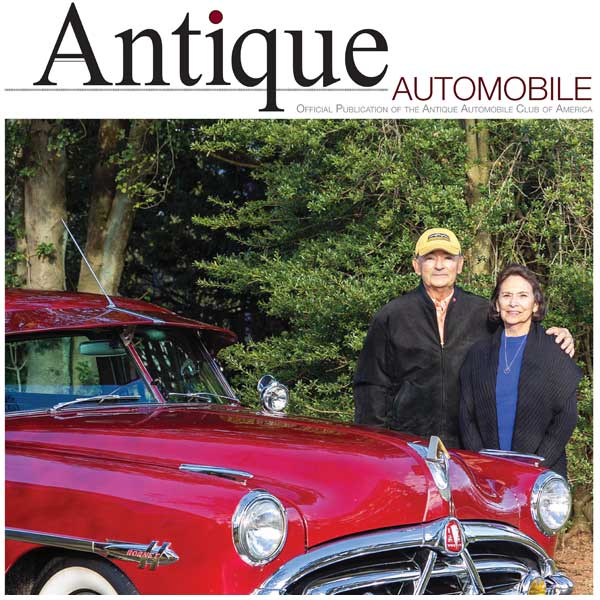
including the ANTIQUE AUTOMOBILE, which is a magazine, and
The Rummage Box. The AACA Library and Research Center, a separate
corporate entity, supports research and restoration efforts.
It is the desire of the AACA to do everything possible through
the national office, publications and the Library and Research
Center to aid individuals, museums, libraries, historians and
collectors dedicated to the preservation of automotive history.
The purpose of the AACA is to provide an organization for members
with a mutual interest in the antique automobile hobby. While
recognizing the importance of commercial enterprises which
are critical to the accomplishment of our independent and collective
goals, the AACA maintains a strict disassociation from any
commercial or charitable enterprise.
The AACA achieves its objectives
through the collective resources of its international membership.regions
and chapters support
the interests of the members on a local basis. AACA members,
directors, and officers are expected to maintain the highest
level of relations with the community at large.
A CONCISE HISTORY OF AACA
The AACA was formed from among a small group of men who attended
Antique Automobile Derbies that had began, in 1931, in connection
with the Automobile Show in Philadelphia. After the fourth
such Derby, Mr. Frank Abramson and Mr. Theodore Fiala conceived
of the idea to form an antique automobile club from among the
previous year's Derby participants. They approached Mr. Jack
Dlugash, promoter of the Derbies, for the participant's names
and addresses, which he gladly provided. Their letter, dated
September 20, 1935, successfully interested these people in
forming such an organization. A meeting was held on November
4, 1935, in the auditorium of the Automobile Club of Philadelphia.
Attendance included the fourteen founder members, plus the
wife of one. Thus was born America's first historical automotive
society, the Antique Automobile Club of America.
The Club's first President,
Mr. Frank Abramson, served the first three years. At a March
16, 1936 meeting, automotive
pioneer, and AACA honorary member, Mr. Charles E. Duryea was
scheduled to speak, but had to withdraw due to illness. Mr.
Duryea and his brother, J. Frank Duryea, had created America's
first commercially successful automobile. This same year a
constitution was drawn up and submitted to the membership for
approval. Unfortunately, Charles Duryea passed away September
28, 1938. Mr. George M. Hughes was elected President in the
fall of 1938 and did much to keep our small club and magazine
going, while serving five of the next six years, with 1942
being the exception, when Hyde W. Ballard served as President.
During these years, beginning January 10, 1938, various AACA
members had meetings in their homes. It was also in 1938 that
club member George Green and his wife called attention to the
club by making an 8834 mile cross country trip from their home
in Lambertville, N.J. to California, touching on Canada and
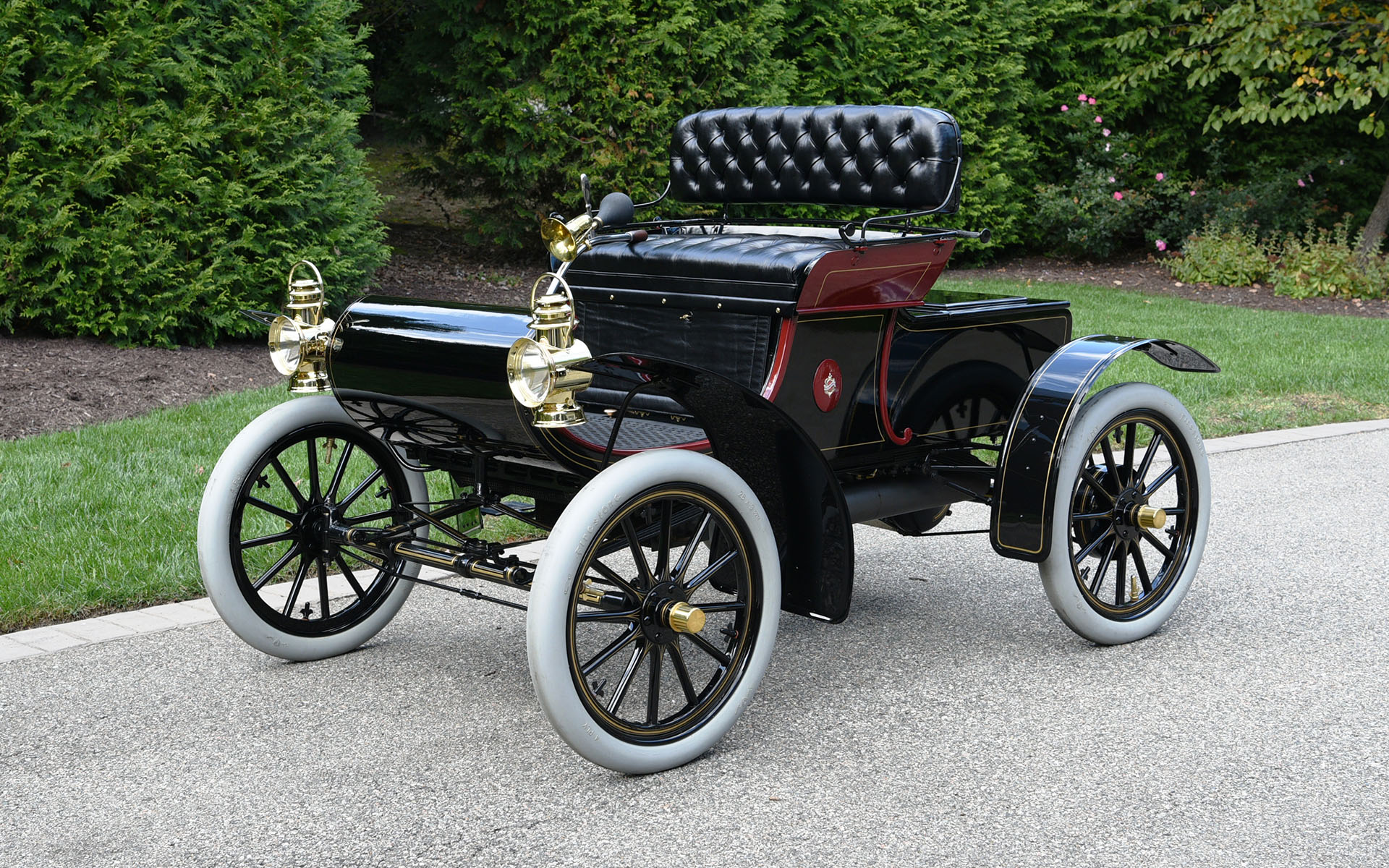
Mexico. The over three month journey in their 1904 Oldsmobile
was made with virtually no problems. The first published drawing
of the club emblem, as we know it today, was designed in 1939
by Mr. Herbert van Haagen of Upper Darby, Pa. Using a power
engraver attachment, many months of labor were required for
Mr. van Haagen to produce the original master pattern.
Volume 1, Number 1 of the magazine was first published in
1937 and called the Bulletin of the Antique Automobile with
the first elected editor being Theodore Fiala. Beginning with
the January, 1943 issue, it was renamed ANTIQUE AUTOMOBILE.
Through 1944, there had been a number of editors and club membership
had reached 400. One of the leading personalities of our Club
during this period was Mr. M.J. Duryea, the son of Charles
E. Duryea. During the years following, he became Editor of
ANTIQUE AUTOMOBILE, and, as such, his influence was felt far
and wide.
The first annual banquet
was held on March 1, 1941, with 78 members attending. Speakers
were James Melton and Ralph De
Palma. During the years prior to 1942 the Club held an Annual
Outing at the homes of various members. On October 18, 1942
the Annual Outing was moved to the Lamb Tavern in Springfield,
Pa., with eighteen cars participating in spite of gasoline
rationing! It was already a tradition. As the Club grew, the
Spring Meet was held in different locales and farther afield.
In 1944 there was an Annual Spring Outing at the Lamb Tavern,
with an annual fall outing at the Oak Terrace Country Club,
in Ambler, Pa. on October 7, 1944. The year 1943 had seen Mr.
Thomas McKean, Jr. become the first AACA life member. On December
15, 1944 a general meeting of the club was held at the Robert
Morris Hotel in Philadelphia, where a new code of by-laws was
discussed. Though not finalized at this meeting, the resulting
by-laws would establish, among other things, the board of directors
concept by which AACA would be governed in the future.
The Fall Meet was
moved to the Devon Horse Show Grounds in 1946 and this
became the site of the
annual fall meet. Also
in 1946, an invitation to the Golden Jubilee of the automobile
industry in Detroit came to AACA and it was decided to drive
there with antique cars in a tour group. The name "Glidden
Tour" was proposed and this became the first of the Revival
Glidden Tours. It was this event that prompted Firestone to
make up new tires for these historic vehicles. One of the Detroit
highlights came when George Green received a gold-colored Hudson
for the performance of his venerable Cross Country 1904 Oldsmobile.
This first tour proved so popular that with tires at last available,
the Glidden Tour once again became a national institution.
As these tours entered new areas, greater interest in antique
cars spread and grew, as did AACA itself.
Our antique cars were, at first, not much to look at, for the
criterion was, "Will they run?". As competitive meets
became well established the incentive for restoring the cars
beyond running condition emerged. Mr. Fred C. Nicholson was
the first Chief Judge for the Club. By 1947 the Club had devised
a classification of categories for competition, divided into
four categories, and 11 classes. In 1949, Fred Nicholson retired
and Mr. Donald A. Gallager became the new Chief Judge. Two
more categories were introduced, these being for Model T Ford
and High Wheeler cars.
By 1951, the increasing
numbers of competing cars necessitated developing a more
comprehensive classification
system. A committee
was formed, which came up with the Junior/Senior system, used
first at the Oct. 13, 1951 Devon Show. In time for the 1952
show season, a new eighteen category classification system
was put into place that remains the basis for our present evolving
vehicle classification system today. The new 1952 classifications
included classic cars, "less than 25 years old and pre-1940".
In 1953, the 200 participating cars literally overflowed the
Devon Horse Show grounds. The next year our Fall Meet was invited
to the Hershey Stadium. During the next 40+ years AACA experienced
exciting growth and expansion. The Hershey Show has since assembled
over 2,000 vehicles at one time, and the Flea Market has since
become world renowned.
The demonstrated
flexibility of the classification system, tuned to the
times, has been complimentary
to achieving this
growth. In 1953 early Model A Ford cars were included in a
new class 18, "Antique Cars w/four-wheel brakes." No
major changes occurred until February, 1957, when a new automotive
definition and class was introduced, "Class 20 - Production
Cars, 1930 to 25 years of age. In 1959 the 1928-1931 Model
A's were pulled from classes 18 and 20, and placed into their
own class. In 1960, production car and truck classes were frozen,
with a 1935 cutoff date. A 1948 cutoff date was established
for classic cars. These rules remained basically unchanged
until 1968, when a new rule was introduced, which allowed expansion
by one year every other year. Then, the July-August, 1974 issue
of ANTIQUE AUTOMOBILE announced the inclusion of vehicles 25
years old and older into the classifications, effective February
1, 1975. This rule continues in effect today. During ensuing
years, separate classes were implemented to separate Ford V-8
cars, Chevrolet Corvettes, Ford Thunderbirds, Ford Mustangs,
1955-57 Chevrolets, and others. New categories were developed
for "specifically named prestige cars" and "limited
production and prototype vehicles". In 1988 the Historical
Preservation of Original Features (HPOF) class was implemented,
and has proven to be very popular.
In the early years, the Club's financial business was handled
by the Provident Tradesmen's Bank of Philadelphia. In 1959,
at the invitation of the Hershey Estates, the financial operation
of all Club business was moved to office space in the building
occupied by the Hershey Museum. Mr. William E. Bomgardner became
the first Business Manager, later Executive Director and Editor
of the magazine. During this period, AACA purchased a building
in Hershey, which is now National Headquarters. In 1986 Mr.
Bomgardner retired and was succeeded by Mr. William H. Smith.
During the 1960's,
divisions were created to achieve placement of national
spring and fall meets in all parts of the country.
A cadre of volunteer national judges was formed, and national
judging schools began. An annual grand national meet was established
at which only senior vehicles would compete, and held for the
first time in 1980, on the grounds of the International Salt
Co. in Clarks Summit, Pa. In 1988, a trade show was added to
the agenda of the annual meeting, and the Premier Founders
Tour (1936 and later) was held in Huntsville, Alabama. In 1991
roundtable discussions at various national meets and tours
were started, and in 1992 national meet seminars were first
held in conjunction with a national meet. In 1994 a new AACA
vintage tour (1927 and earlier) was approved to augment the
Reliability Tour (1914 and earlier) on odd years, beginning
in 1997. divisional tours, shorter in duration than the previously
established tours, have been initiated, with the first being
held in Manassas, Virginia during 1995.
Growing with the
hobby has become a tradition with AACA as times have changed.
From 850 members in 1948; 1,400 in 1949;
5,000 in 1954; 8,700 in 1959; 23,000 in 1969; 37,000 in 1976;
to over 50,000 in AACA's Golden Jubilee year, 1985, growth
has remained steady. Much of this growth can be credited
to the outstanding dedication and achievement of the officers
and directors, as well as the efforts and activities of the
regions and chapters. Beginning with founding of the Illinois
Region, the number of regions and chapters has grown to more
than 400 today. Innovative approaches to enhance enjoyment
by its members, has helped AACA achieve the enviable position
of being the largest club in the world dedicated to furthering
interest in, and preservation of, antique automobiles and
their
history.
Link to the AACA headquarters
|
 |